What Is AI Workflow Automation and Why Is Everyone Talking About It?
Prachi Wadhwa
Author
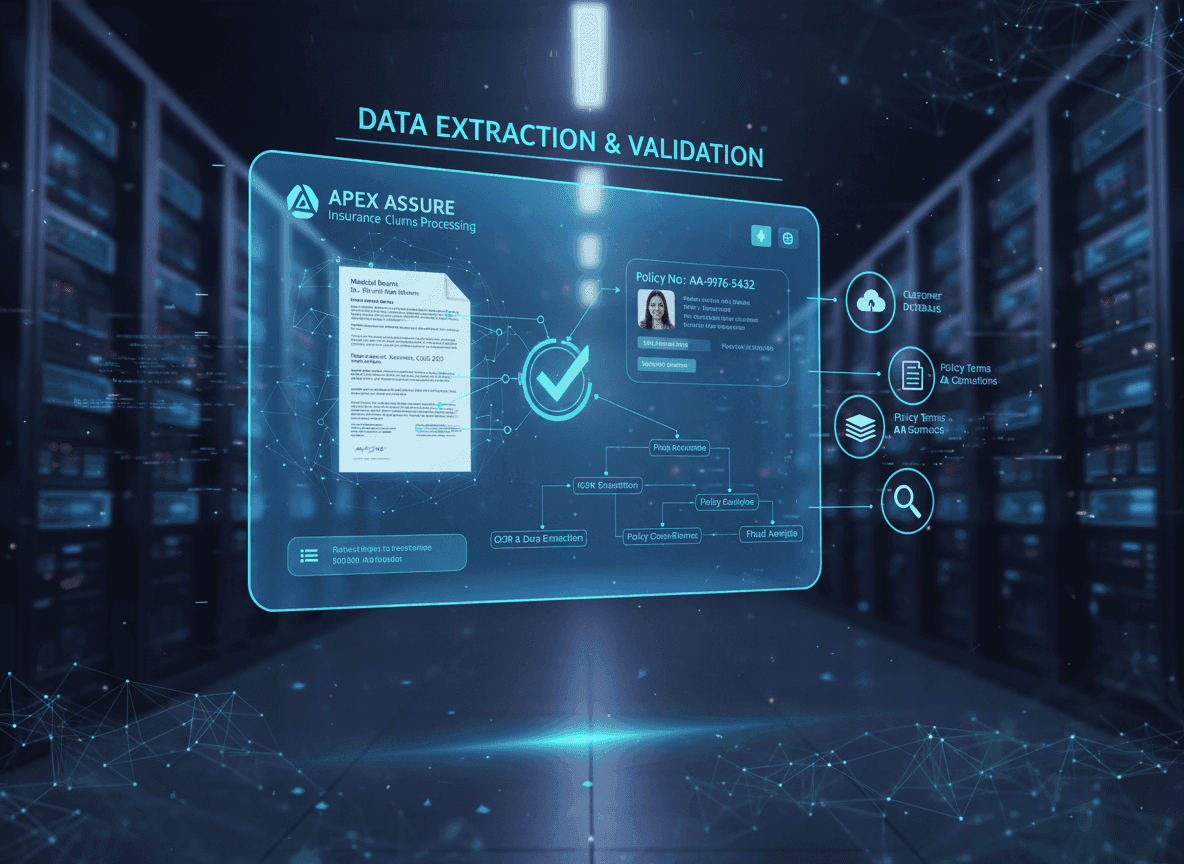
Walk into any operations meeting today and you'll hear the same refrain: "We need to do more with less." But here's what's changed in the past 18 months—companies aren't just streamlining processes anymore. They're fundamentally reimagining how work gets done.
AI workflow automation represents a quantum leap beyond the automation tools businesses have relied on for decades. Instead of simply moving data from point A to point B, these systems think, adapt, and orchestrate entire business processes with human-like judgment.
According to McKinsey's 2024 AI report, organizations implementing AI workflow automation are seeing productivity gains of 30–50% in automated functions, with some operations teams reducing manual work by up to 70%. The technology has matured from experimental to mission-critical in just two years.
Understanding AI Workflow Automation at Its Core
The Fundamental Definition
AI workflow automation is the application of artificial intelligence— including machine learning, natural language processing, and decision-making algorithms—to design, execute, and optimize business workflows without continuous human oversight.
Think of it as upgrading from a conveyor belt to a team of digital employees. Traditional automation moved the belt faster. AI workflow automation puts intelligent workers on the line who can handle exceptions, make judgment calls, and improve their performance over time.
The technology combines several key components:
AI agents serve as autonomous decision-makers within workflows, handling tasks that previously required human judgment. These agents can read emails, analyze documents, interact with customers, and route information based on context rather than simple rules.
Workflow orchestration connects multiple AI agents and systems, creating end-to-end processes that span departments and applications. A single workflow might involve customer communication, data extraction, approval routing, system updates, and analytics—all happening automatically.
Adaptive learning enables these workflows to improve continuously. Unlike traditional automation that performs the same way forever, AI workflows analyze outcomes and adjust their approach based on what works best.
Why the Sudden Urgency?
Three factors converged to make 2024–2025 the inflection point for AI workflow automation.
First, large language models became genuinely useful for business applications. GPT-4 and Claude introduced capabilities that let AI understand nuanced instructions, communicate naturally, and handle ambiguous situations—requirements for real-world business processes.
Second, the integration ecosystem matured dramatically. APIs became more standardized, no-code platforms emerged, and vendors built pre-configured connectors that made it feasible to deploy AI workflows in weeks rather than months.
Third, economic pressure intensified. A Gartner survey found that 82% of CFOs expect to maintain or grow output while keeping headcount flat through 2026. AI workflow automation became the bridge between those competing demands.
The Business Impact Nobody Predicted
From Cost Savings to Revenue Generation
Early adopters discovered something unexpected: AI workflow automation doesn't just cut costs—it unlocks entirely new capabilities.
Take customer onboarding. Traditional automation might auto-populate forms and send welcome emails. AI workflow automation can analyze each customer's unique situation, customize the onboarding path, identify upsell opportunities, flag risk factors, and route complex cases to specialists— all while maintaining a personalized customer experience.
Klarna reported that its AI customer service agent handles the equivalent work of 700 full-time agents while resolving issues 20% faster and with higher satisfaction scores. Human agents now focus on complex cases where empathy and creativity matter most.
The Operational Transformation
Beyond individual processes, AI workflow automation is reshaping how operations teams function. Digital employees—AI agents designed to execute specific roles—are joining organizational charts alongside human employees.
These digital employees collaborate with teams. They attend virtual meetings, communicate via Slack or Teams, access enterprise tools, and hand off work when human judgment is required.
A manufacturing operations leader explained: "We used to have workflows that people followed. Now we have AI agents that follow workflows alongside people. Our ops team moved from executing processes to designing and optimizing them."
Real-World Applications Across Industries
Finance and Accounting
Invoice processing that once took days now completes in minutes. AI agents extract invoice data, match purchase orders, flag discrepancies, route approvals, post entries, and notify vendors—without human intervention until approval is required.
Firms report 80% faster processing and 95% fewer data-entry errors.
Sales and Marketing
AI agents qualify leads, enrich data, score prospects, personalize outreach, schedule meetings, and update CRMs—learning continuously which approaches convert best.
Customer Support
Support workflows route tickets intelligently, resolve common issues, escalate complex cases with full context, assist human agents, update knowledge bases, and flag at-risk customers via sentiment analysis.
Human Resources
Recruitment workflows screen resumes contextually, coordinate interviews, conduct initial screenings, assess responses, and manage approvals—cutting time-to-hire by 40–60%.
Building Blocks of Modern AI Workflows
The Technology Stack
- Foundation layer: Cloud infrastructure and APIs
- Intelligence layer: LLMs and machine learning models
- Orchestration layer: Workflow engines and automation platforms
- Interface layer: Dashboards, messaging, and notifications
Critical Success Factors
Successful organizations focus on high-value workflows, design for human–AI collaboration, implement governance early, and treat AI workflows as evolving products rather than one-time projects.
The Future of Work Is Already Here
AI workflow automation is already reshaping competitive advantage. The question is no longer whether to adopt it—but how quickly.
Leading organizations are building AI workflow capabilities as core competencies, training teams to design and optimize processes, and establishing ethical and operational governance.
As one CTO summarized: "Traditional automation helped us survive. AI workflow automation is helping us thrive. We're not just more efficient—we're more capable."
Internal Links
- How Do AI Workflows Differ From Traditional Automation?
- What Does an End-to-End AI Workflow Look Like in Practice?
Sources
- McKinsey & Company (2024). The State of AI in 2024
- Gartner (2025). CFO Survey: Technology Investment Priorities
- Klarna (2024). AI Assistant Handles Two-Thirds of Customer Service Chats
- Deloitte (2024). Intelligent Automation Survey Results