Which Jobs Can AI Agents Replace Today in Real Businesses?
Prachi Wadhwa
Author
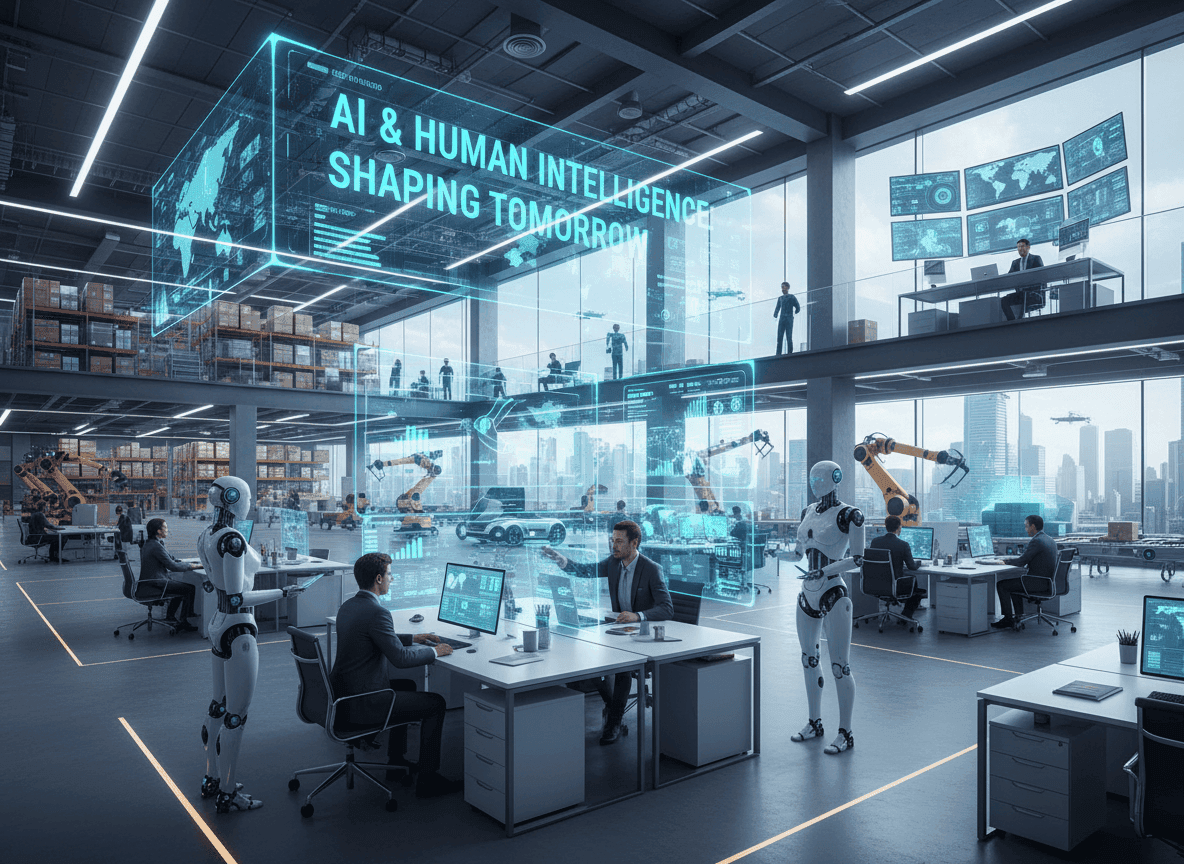
There's a difference between theoretical AI capabilities and what's actually happening in businesses today. While research labs demonstrate impressive AI achievements, the question that matters for workers and business leaders is simpler: Which jobs are AI agents replacing right now, at scale?
The answer isn’t speculation—it’s observable data from thousands of companies deploying AI agents and digital employees across industries. Below is a clear-eyed look at the roles being replaced, why they’re vulnerable, and how widespread the displacement already is.
The Criteria: What Makes a Job Replaceable by AI Today?
Five Characteristics of Highly Replaceable Roles
Roles currently being displaced share common attributes that make them automation targets:
- High task repetitiveness: 70%+ of work involves repeating similar actions.
- Structured data processing: Work centers on emails, forms, spreadsheets, or databases.
- Rule-based decision-making: Logic can be expressed as clear IF–THEN rules.
- Limited stakeholder interaction: Minimal relationship-building or negotiation.
- Low error tolerance risk: Mistakes have limited real-world consequences.
Oxford Economics reports roles with four or five of these characteristics carry a 65–80% probability of significant automation within 2–3 years.
What AI Agents Can Do Reliably Today
- Document processing and data extraction (95%+ accuracy)
- Text generation for routine communication
- Classification, routing, and prioritization
- Scheduling and coordination
- Basic analysis and reporting
- Consistent rule-based decision execution
Specific Roles Being Replaced Right Now
Data Entry Specialists and Clerks
Current displacement: 60–70% reduction since 2023
Data entry roles are being eliminated across healthcare, logistics, e-commerce, finance, and government. AI agents extract information from documents and systems faster, cheaper, and more accurately than humans.
Outlook: Standalone data entry jobs will be nearly extinct by 2027, replaced by smaller teams handling validation and exceptions.
Tier 1 Customer Support Representatives
Current displacement: 45–55%
Conversational AI now handles password resets, order tracking, FAQs, and basic troubleshooting. Humans handle escalations and emotionally complex cases.
Outlook: Another 30–40% decline in Tier 1 roles by 2027.
Basic Content Moderators
Current displacement: 50–60%
AI now performs first-pass moderation for text, images, and video at scale. Humans handle appeals, cultural nuance, and policy refinement.
Outlook: 80–90% automation by 2027.
Invoice Processing and Basic Bookkeeping
Current displacement: 40–50%
AI agents extract invoice data, match purchase orders, post transactions, and manage approvals. Humans handle disputes, analysis, and financial oversight.
Outlook: Entry-level bookkeeping roles decline 50–60% by 2027.
Resume Screening and Initial Candidate Assessment
Current displacement: 55–65% reduction in screening time
AI systems read resumes, rank candidates, and schedule interviews. Recruiters focus on interviews, culture fit, and closing candidates.
Outlook: 80%+ automation of initial screening by 2027.
Partial Displacement: Roles Shrinking, Not Disappearing
Administrative Assistants
AI automates scheduling, email triage, travel booking, and expense reports. Remaining roles focus on discretion, coordination, and executive support.
Estimated reduction: 25–35%
Paralegal and Legal Support
Document review and research are increasingly automated, while humans handle case strategy and client communication.
Estimated reduction: 20–30%
Junior Financial Analysts
AI handles data gathering and reporting. Analysts focus on insights and strategic recommendations.
Estimated reduction: 30–40%
Jobs That Aren’t Being Replaced (Yet)
- Senior leadership and strategic decision-makers
- Relationship-driven roles (sales execs, therapists, teachers)
- Creative and innovation-focused positions
- Highly specialized expert roles
- Skilled trades and physical labor in dynamic environments
The Economic Reality
What Displacement Actually Costs
Automation causes real hardship for some workers. MIT and Brookings research shows 58% of displaced workers find comparable work within 12 months, while 19% experience prolonged unemployment.
The Productivity Dividend
AI-driven productivity gains are creating new roles and opportunities. The World Economic Forum projects 97 million new jobs emerging alongside displacement.
What This Means for Your Organization
Strategic Workforce Planning
The most successful companies redesign work instead of simply cutting headcount—automating execution while elevating human roles.
For Individuals in Vulnerable Roles
- Develop AI-complementary skills
- Learn to work with AI tools
- Focus on judgment, creativity, and relationships
- Move toward less automatable adjacent roles
Looking Ahead: What’s Next
Likely displacement targets for 2026–2028 include basic software development, junior design roles, standardized financial planning, routine legal work, and parts of medical diagnostics.
The trajectory is clear: AI will continue replacing routine cognitive work. Adaptation—not denial—determines outcomes.
Internal Links
- Is AI Really Replacing Jobs or Just Changing Them?
- How Are Companies Using AI to Replace Entire Roles?
- What Are Digital Employees and How Do They Work?
- Will AI Replace My Job and What Should I Do?
Sources
- Oxford Economics (2024). AI Automation Probability by Occupation
- Klarna (2024). AI Customer Service Impact Report
- Zendesk (2025). Customer Service AI Benchmark
- Meta (2024). Transparency Report
- MIT & Brookings (2024). Worker Displacement Study
- World Economic Forum (2025). Future of Jobs Report
- U.S. Bureau of Labor Statistics (2025). Employment Projections